Masa’s Third Wave
By Jorge Gaviria
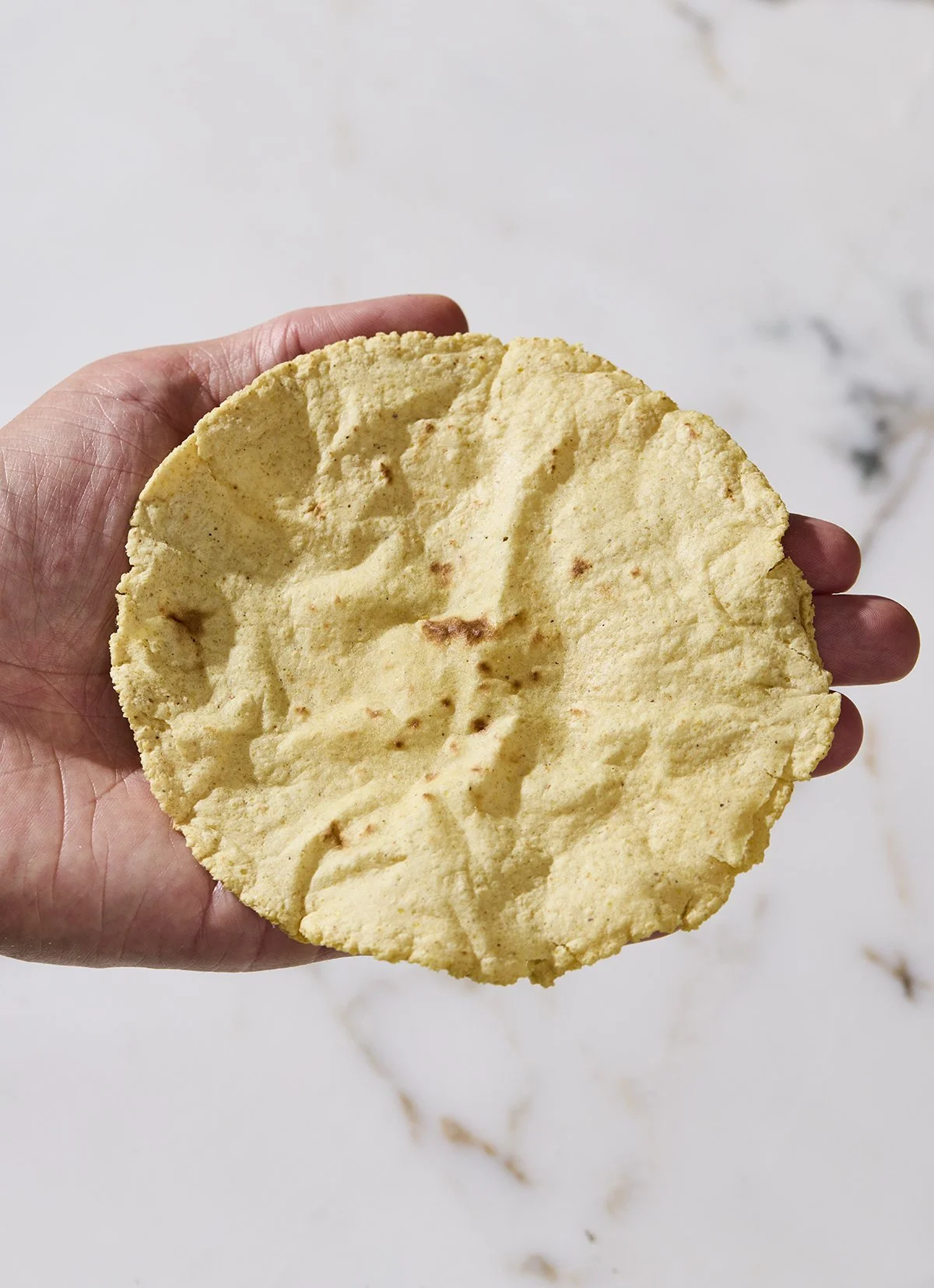
The flavor of masa made from nixtamalized, heirloom corn is so distinct that once you’ve had a tortilla like that, you really can’t go back. Photo by Graydon Herriott.
I grew up in Miami, where so many Latinx communities converge, so corn—and masa specifically—was an elemental part of my diet. It was weekend carnitas tacos, hallacas around Christmastime, toaster-oven tostadas after school and so much in between. What I didn’t know at the time was that much of the masa I was eating did not live up to its highest potential.
It wasn’t until a trip to Oaxaca in 2014 that I experienced the real thing for the first time, by way of a humble tortilla. The earthy scent, the chew of the masa, the lingering, nutty, sweet flavor of corn and the immediate connection to its history and terroir: these tortillas felt like returning to a home I’d never known. Something that tastes that good and is so deeply nourishing is worth understanding and celebrating. So, since 2014, that’s what I’ve been doing: I started Masienda to import heirloom corn from smallholder farms in Mexico, so that more folks could make masa the traditional way.
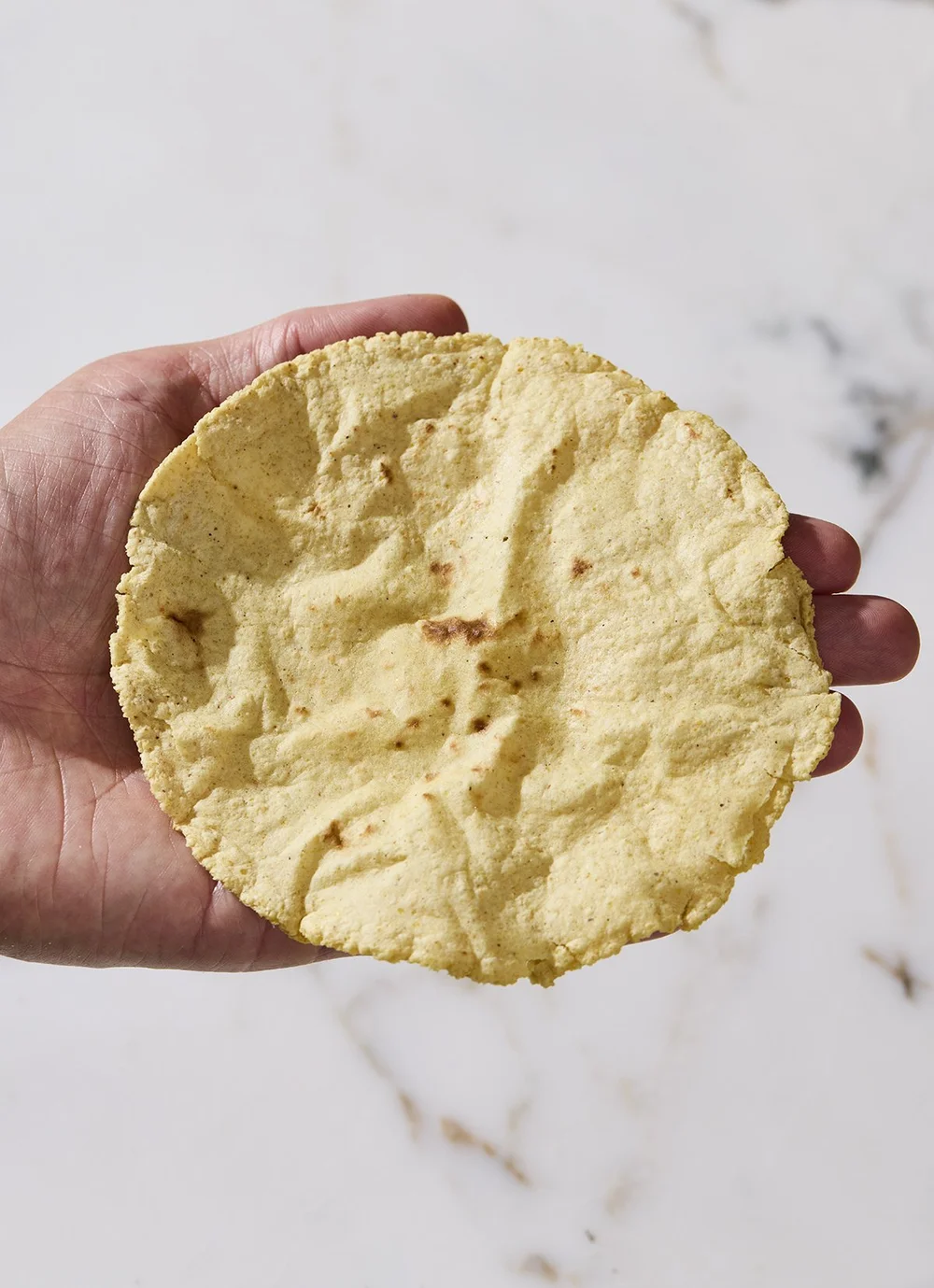
The flavor of masa made from nixtamalized, heirloom corn is so distinct that once you’ve had a tortilla like that, you really can’t go back. Thanks to the growth of Latinx diaspora communities in the U.S., the development of modern Mexican cuisine and growing support for single-origin ingredients, we don’t have to. We’re in the midst of a bonafide masa movement.
I find it helpful to think about the evolution of the masa foodway in three waves, similar to the three waves of coffee in America. First wave equals convenience and cost-effectiveness like Folgers and Nescafé; second wave equals the experience of coffee drinking, with nods to Italian coffee culture from industry leaders like Starbucks; third wave equals attention to detail in sourcing and preparation from specialty roasters like Stumptown, Intelligentsia and Counter Culture.
The first wave of masa was all about introducing masa flour as an alternative to the traditional method. Like its coffee analogs, Maseca (the most popular brand of masa harina on the market, introduced in 1941) ushered in an era of convenience, value and mass consumption. In the years that followed, the Mexican diaspora grew in the US, and with it, a second wave of small tortillerías emerged, who prepared fresh tortillas and masa in the traditional method using nixtamal and molinos (typically with U.S.-grown corn) for immigrant communities and for Americans seeking “authentic” Mexican food.
From milpa to mesa (farm to table), the third-wave masa movement is underway as we speak. Restaurants like Pujol in Mexico City, Cosme and Empellón in New York, Taco María in Southern California and countless others have helped usher in a new, and yet decidedly familiar, era of masa, made the traditional way.
This masa is different. It is firmly rooted in the ethos of conscious and active consumption, processing corn in-house and refusing to source the commodity corn that had characterized the second wave. The corn, in this case, is the thing: corn from Mexico, home to a cornucopia of traditional milpa systems. Chefs and industry professionals are now talking about single-origin tortillas and acknowledging varietals of Mexican corn by name, provenance and producer, the way baristas talk about Ethiopian shade-grown coffee or sommeliers talk about Gamay grapes from Beaujolais.
What’s more, masa now provides a firmament to plant a political flag. For decades under NAFTA, commodity corn produced by big growers flowed only in one direction: from big U.S. factory farms to Mexican processors. The effect was to drive down the price of corn in Mexico and threaten the very existence of farmers as well as the survival of various varietals of heirloom corn.
But today, in a cheeky reversal of influence, growers in Mexico, corn’s birthplace, are shipping landrace heirloom varietals northward. Third-wave masa, in other words, is much more than a foodstuff: It is a movement defined by resistance.
There are about 3 million smallholder farmers in Mexico, according to the International Maize and Wheat Improvement Center (CIMMYT). They are the custodians of heirloom corn. The entire global supply started here, and if we want to preserve that flavor, tradition and genetic diversity, we have to give them a reason to continue to grow it by creating an appetite for tortillas made the traditional way.
“Many years ago, producers sold very little and never focused on sales, because there was no market that would buy many tons of corn from them,” says Juan Velasco Meza, a corn farmer in Santa Ana Zegache, Oaxaca. “So most of the corn was given to the animals. They dedicated themselves to fattening animals. There was more market for that then. But now, they don't have to do double work, planting corn for animals to gain weight. Now, just planting corn and selling directly to the market that wants it favors us much more. Farmers are now interested in planting without even realizing that we are rescuing these [heirloom corn] colors again. It is important to have a market to sell and obtain resources to continue investing in cultivation and resources for your everyday way of life.”
A couple of years ago, when I sat down to dinner at Colita in Minneapolis, and our server could speak fluently about how important the flavor of the heirloom corn was to the experience of the lamb barbacoa taco, I knew we were making progress. Diners are truly excited to educate themselves about the grain that’s absolutely foundational to civilization in North America but has, in my opinion, been underappreciated and undervalued for so many years.
“The experience that we can have today with tortillas and other masa products is exactly what I wanted 10, 12 years ago, which is to say it’s trivial for me to go get a delicious tortilla, that is profoundly more delicious, more visually beautiful and more storied than any tortilla I could have gotten in years past,” says chef Carlos Salgado of Taco María in Costa Mesa, California. “This has had an influence that has even bounced back into Mexico.”
This movement may have started with chefs, but it’s now in the hands of home cooks, too. During the pandemic, Masienda, which at the time was almost entirely a B2B company, nearly shuttered. Around the time when people were panic-buying flour and toilet paper in bulk, we realized that the five-pound bags of corn we had for sale on our site (intended as samples for chefs) were selling out. Home cooks are embracing nixtamalization like never before. They’re seeking the elusive tortilla puff, or the scent of sopes frying in hot oil, or the fluffy texture of the tamales their grandmother made. While, for many years, we strayed from masa’s origins, it’s clear we’re finding our way back, together.