Dunas de Yeso in Cuatrociénegas, Mexico
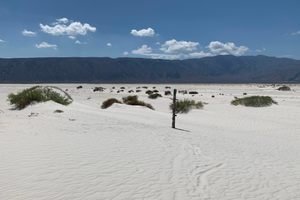
Nestled in the Cuatrociénegas Reserve, desert winds slowly form these majestic, white dunes, known as Dunas de Yeso. The dunes are the second largest gypsum dunes in North America. The sand that forms the dunes dates back to the Cretaceous Era, when this area was once at the bottom of a seabed.
The six rocky mountain ranges that surround the desert valley are full of gypsum. When it rains, rainwater carries gypsum deposits from the surface of the mountains to the aquifers (underground porous rock) that, through springs, feed the area’s pools. When these shallow pools evaporate, the gypsum is exposed. These gypsum deposits then slowly erode into fine sand crystals that are swept up by the wind to form the dunes. You can see similar expanses of gypsum at White Sands National Park in New Mexico.
The winds here constantly change the desert landscape. Walking through these dunes is like a journey back in time to when this desert was a seabed teeming with life from the Cretaceous. The sand’s pure gypsum content makes the sand very white, which shines in the sunlight making for glorious sunsets.