Sumida Hokusai Museum in Tokyo, Japan
Many people who are vaguely familiar with classical Japanese art have probably seen pictures of ukiyo-e, or Japanese woodblock prints. One of the most famous works that may come to mind is a print called The Great Wave off the Coast of Kanagawa, which features a large blue wave towering over a couple of small boats hidden within the surf. This work and many others were created by an 18th/19th-century artist named Katsushika Hokusai, who is recognized as one of the great masters of ukiyo-e, although most people outside of Japan who have not studied Asian art history might struggle to name the artist.
Hokusai was born in and lived in Sumida City (or Sumida-ku), a ward on the east side of Tokyo on the east bank of the Sumida River. Seeking to honor the artist’s legacy, the local government of Sumida funded the construction of a museum dedicated to the artist’s work near his birthplace. The museum building, designed by the award-winning architect Sejima Kazuyo and opened in 2016, is a four-story modern metallic structure that stands near the rail lines in an otherwise innocuous-looking area on the south side of the ward.
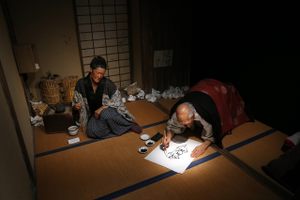
The top floor contains the permanent collection and features multiple prints and paintings (or replicas) spanning the full range of Hokusai's career, including one copy of The Great Wave off the Coast of Kanagawa. Part of the display shows how ukiyo-e prints are created. Additionally, an enclosed area near the center of the main gallery shows a recreation of the interior of Hokusai's home along with an 84-year-old Hokusai on the floor painting while his daughter watches. (Hokusai's hand even moves occasionally, making the model look eerily lifelike.) The third floor features additional galleries with special exhibitions, including ukiyo-e works by other artists.
While the museum is small, it overall provides an excellent introduction to ukiyo-e and the art of Katsushika Hokusai.