Kwai Chai Hong in Kuala Lumpur, Malaysia
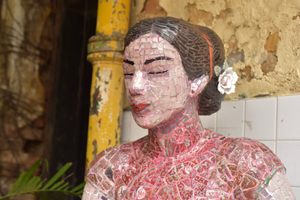
In the heart of Kuala Lumpur's Chinatown, there is a hidden cul-de-sac alleyway between the busy streets of Lorong Panggung and Jalan Petaling. Long neglected and in bad shape, a project was recently initiated to give this secret alley a big makeover to bring back the golden age of Chinatown.
The alleyway is called Kwai Chai Hong, literally meaning "Little Demon Alley." It is believed to be a reference to the naughty children that once lived on this street, as the word kwai (which means "demon" or "ghost") and its variations are often used to refer to brats in Asian culture. Alternatively, some say that the alley was teeming with drunkards, drug addicts, and the like, or that it was a haunt of some street gang whose members called themselves kwai chai.
Today, the refurbished alley is home to restored buildings and shophouses from the pre-war era, as well as murals depicting everyday life in 1960s Chinatown. As you enter the almost-inconspicuous gate, you will be greeted by a quaint bridge called Hong Qiao leading back to the past. Inside an alleyway lined with ornamental red lanterns, adds vintage charm and character.
Kwai Chai Hong is now quite popular for its interactive art. There is a chair to sit on in front of the mural of a barber, for example, and a real-life jumping rope in front of a mural of little girls playing on the street. One of the murals is also very recognizable, depicting the iconic hair-rollered landlady from the 2004 action comedy film Kung Fu Hustle.
If you look closer, you may notice that every one of the murals has a QR code beside it. By scanning the code, you will get a soundtrack fitted for each mural, further immersing you in the atmosphere of Chinatown’s golden age.
Another attraction in the alley, often overlooked by photo-op seekers, is the old lamppost standing in the corner. Installed around 1903 when the city of Kuala Lumpur got electricity for the first time, this lamppost is believed to be the only one that has survived from that first, early 20th-century set.