Kungstornen in Stockholm, Sweden
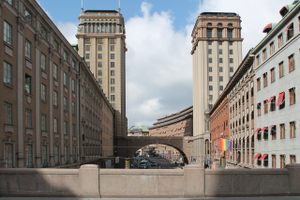
Skyscrapers are so common nowadays that it is hard to imagine a time when they were new and trendy. But a century ago, this was very much the case. As a product of industrialization, these types of buildings became popular all over the world. As with all new things, there was skepticism and a pioneer was needed to help people get used to the idea. The Swedish architect Sven Wallander was such a man, introducing Europe to its first skyscraper.
While certainly a forward-thinking man, Wallander was by no means quick. Skyscrapers were an American invention, with the first one being built in Chicago in 1885, and many more following behind it. But the first kungtorn was not built until 1924. The second followed soon after, and was completed in 1925.
The first tower is based on the older style of Manhattan skyscrapers in the early 1920s, many elements of which can be spotted in the design of the tower. In fact, Wallander made a study trip to the island to get inspiration for the first ever skyscraper in Europe.
The second tower was designed by Ivar Callmander, who went for a more Art Nouveau style. Both towers had 17 floors and stood 60 meters high, although Callmander added one meter to his tower to have the tallest skyscraper in Europe. The two towers became immediate icons for the city and drew many tourists. It was not long after this that skyscrapers started being built in the rest of the continent.