Historical Village of Hokkaido in Sapporo, Japan
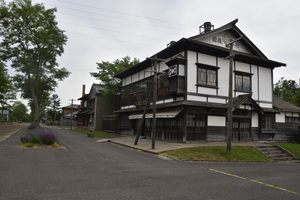
Hokkaido, the northernmost and largest of Japan’s 47 prefectures, was once considered the last frontier, not unlike the American Old West. Sapporo, the capital of Hokkaido, is also home to a “pioneer village”—but it may be a little different from what you’d expect.
The Historical Village of Hokkaido, known in Japanese as Kaitaku no Mura or the “Pioneer Village,” is an open-air museum established in 1967 in Atsubetsu Ward on the outskirts of Sapporo, surrounded by an untouched forest. It is home to a total of 52 historic buildings, many of them over a century old, the oldest dating back to the 1870s. Only a few are modern reconstructions; the rest were relocated here from various parts of Hokkaido.
Some of the notable buildings include the Yamamoto Barbershop (circha 1920s), the Otaru Newspaper Company headquarters (built in 1909), and several residences of the Development Commission—also known as the Colonization Office—officials, dating to the first half of the Meiji era (1868-1912). Visitors can explore each of the buildings’ interiors, from the long corridors of a former school to the dimly lit study in a hospital annex.
Inside the barbershop (which actually functioned as an on-site barbershop until 1986), for instance, there is a pair of mannequins posing as the barber and the customer, with a recording recreating their conversation playing, offering a glimpse into people’s lives in Hokkaido back in the early 20th century.
The Historical Village is split into four areas: Town, Fishing Village, Farm Village, and Mountain Village. In the latter Villages, rural life is recreated down to the smallest detail, giving visitors unique perspectives. Though the open-air museum runs a horse-drawn tram, which is replaced by a sleigh in winter.