Cholera Monument in Eyemouth, Scotland
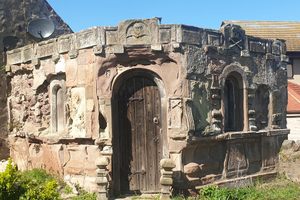
In the mid-1800s, the seaport fishing village of Eyemouth experienced a calamity. Over the course of several weeks, this small community would see its population of around 1,300 shrink by 10 percent. This was mostly caused by unsanitary living conditions and no access to clean portable water.
This deadly incursion occurred in the same year as the Eyemouth Disaster. With so many bodies to be buried over such a short period, the devastated community thought it would be prudent to have the infected corpses placed into a communal pit. To achieve this, existing headstones would have to be removed to make room. Rather than discarding the gravestones of beloved ones, they were reincorporated into a building known as a watch-house.
This was a structure that was put into place throughout cemeteries in both England and Scotland. These were meant to act as a deterrent for "resurrectionists," professional body snatchers who would dig up the recently deceased and sell their corpses to medical schools, where they would be used in anatomy lessons. Family members or volunteers would shelter in these buildings and guard the premises to discourage such unscrupulous acts.