Chikaramochiya in Kamakura, Japan
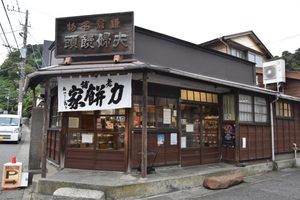
Chikaramochi is an umbrella term for any traditional mochi, or rice cake, that is believed to grant strength (chikara) to whoever eats it. Despite the fact that it's common across Japan, it lacks a definitive definition. In the city of Kamakura, it refers to freshly pounded rice cake covered in sweet red bean paste, its "strength" attributed to the local folk hero Kamakura "Gongorō" Kagemasa.
Born circa 1069, about a century before Kamakura rose to its full power, Gongorō was a stalwart samurai who fought in the Gosannen War on the side of the Kawachi-Genji clan in his youth. Legend has it that he was shot in his right eye in the battle but, undaunted, immediately fired back at the archer. He was later deified at Goryo Shrine, also known as Kamakura-Gongorō Shrine, known to grant victory and success to its worshippers.
Founded in the Genroku era (1688-1703) on the street leading to Goryo Shrine, the Chikaramochiya is the oldest surviving shop in the city, known for its delicious rice cakes and other traditional Japanese sweets. Its Gongorō-chikaramochi continues to be made according to the recipe from the times of its establishment, but as it contains no additive and expires within the day, there is also an option made in gyūhi, a softer variety of mochi, which lasts for up to three days. From February to April, it is also made as kusa-mochi, flavored with mugwort.
The establishment is also known for its fukumen-manjū, or "lucky face dumpling," a small Castella-style cake with red bean paste inside, whimsically shaped after the ritual masks used in the Haramitto Procession, a unique annual festival held at Goryo Shrine.