Extinct Bird Displays in Philadelphia, Pennsylvania
Since Drexel University's Academy of Natural Sciences has been housed at its current location since 1876, it's not surprising that some of the public exhibits have changed over the years. Even more surprising, though, is how much has remained the same.
Perhaps the best-known feature of the current museum is its 37 dioramas located in the North American, African, and Asian halls on the first and second floors. These dioramas, assembled between the 1930s and 1950s, have changed minimally since their inception aside from general upkeep and their informational plaques. Each diorama is worth lingering in front of. The larger centerpiece taxidermied animals are positioned as if they have just noticed your presence. The lower grass brush and upper tree branches often include smaller, easily missed taxidermy animals reacting to the scene, and the curved painted backgrounds contain small landscaping details that enhance the depth of the dioramas.
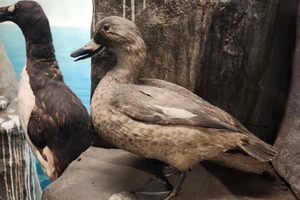
Absent from the museum map as of 2024, though, are two dioramas on the third floor: a small, window-like display of three extinct seabird species and a much larger forest scene featuring passenger pigeons. Across from the seabird display are two murals painted with the same depth and detail as the dioramas on the lower floors. To the left, you'll find the towering moas of New Zealand. On the right is a prehistoric scene depicting archaeopteryx. Since there are no barriers to these murals, you can get as close as you like to take in all the immersive background details.
Turn left at the passenger pigeon diorama and continue towards the Outside in Exhibit, and you may notice a third mural down a short hall across from the bathrooms. This mural shows endemic birds of Mauritius, all extinct except for the pink pigeon.