Ethnic Music Museum of Busot in Busot, Spain
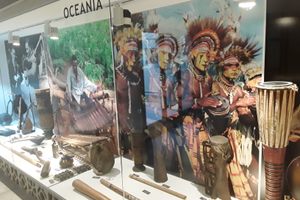
What this museum lacks in size, it makes up for in quality. The Ethnic Music Museum in the small municipality of Busot is based on a private collection donated by Carlos Blanco Fadol, a long-time resident of Busot originally from Uruguay.
Fadol's collection consists mainly of musical instruments acquired during his trips to five continents. However, several non-instrument exhibits are also worthy of note, like a machine that was used to imitate the sound of wind and storms in a Valencian theater, and a sound-generating tribal sculpture of a pregnant woman used to announce the birth of a child.
Among the instruments themselves are two examples of a kirar or kar, a lyre-like Ethiopian stringed instrument, with a sound box constructed from a human skull. As this instrument would normally have a bowl-shaped wooden sound box, it has been suggested that the skull versions are 19th-century tourist pieces made as bizarre souvenirs.
Aside from the artifacts, displays include high-quality photographs of the instruments in use in their traditional environment. Many exhibits have QR codes that can be scanned by phone to generate a short sound file of the instrument being played.