Silver Reef in Leeds, Utah
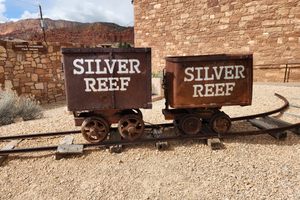
By the mid-19th century prospectors and geologists had a good idea of what rock types were most likely to host precious metal deposits, and sandstone was not one of them. So when John Kemple reported silver values in sandstone from the Silver Reef area in the late 1860s, his discovery was greeted with disbelief and derision. Even Kemple was unsure of his findings. Not until the mid-1870s did a mining rush get underway, when people finally got around to checking the occurrence firsthand.
The silver mineralization is hosted in the Springdale Sandstone (called the Silver Reef Sandstone locally). It's a light-colored sandstone that's now considered the lowest part of the Kayenta Formation, which is otherwise one of the classic red bed units that accounts for the scenery in southern Utah. The metal values are localized by folding in the sandstone, and it's thought that solutions flowing through the sandstone precipitated the deposits, although the details remain in dispute.
What isn't in dispute is that bonanza-grade ores did occur, and the mining camp of Silver Reef sprang up to exploit them. By around 1880 four mills were running in Silver Reef, and the camp's population was probably around 1500. It didn't last, however: by 1888 the camp was in decline, due to falling silver prices, increased mining expenses due to the greater depths of excavation, and decreasing ore grade. Although desultory activity continued into the 20th century, Silver Reef's glory days were over.